I’ve gotten a lot of great comment and emails about the last dish I posted, along with pleas for post more “simple and easy meals.” So here’s one more. I wasn’t going to post this here, because it’s SO easy and SO straightforward, I thought it wasn’t necessarily blog-worthy. But my husband loves this dish and convinced me to go ahead and do a full post.
We make this meal pretty regularly now, because not only is it a no-brainer, but it also contains only ingredients we tend to have on hand at all times. So it’s the perfect “I don’t know what to make for dinner” dinner.
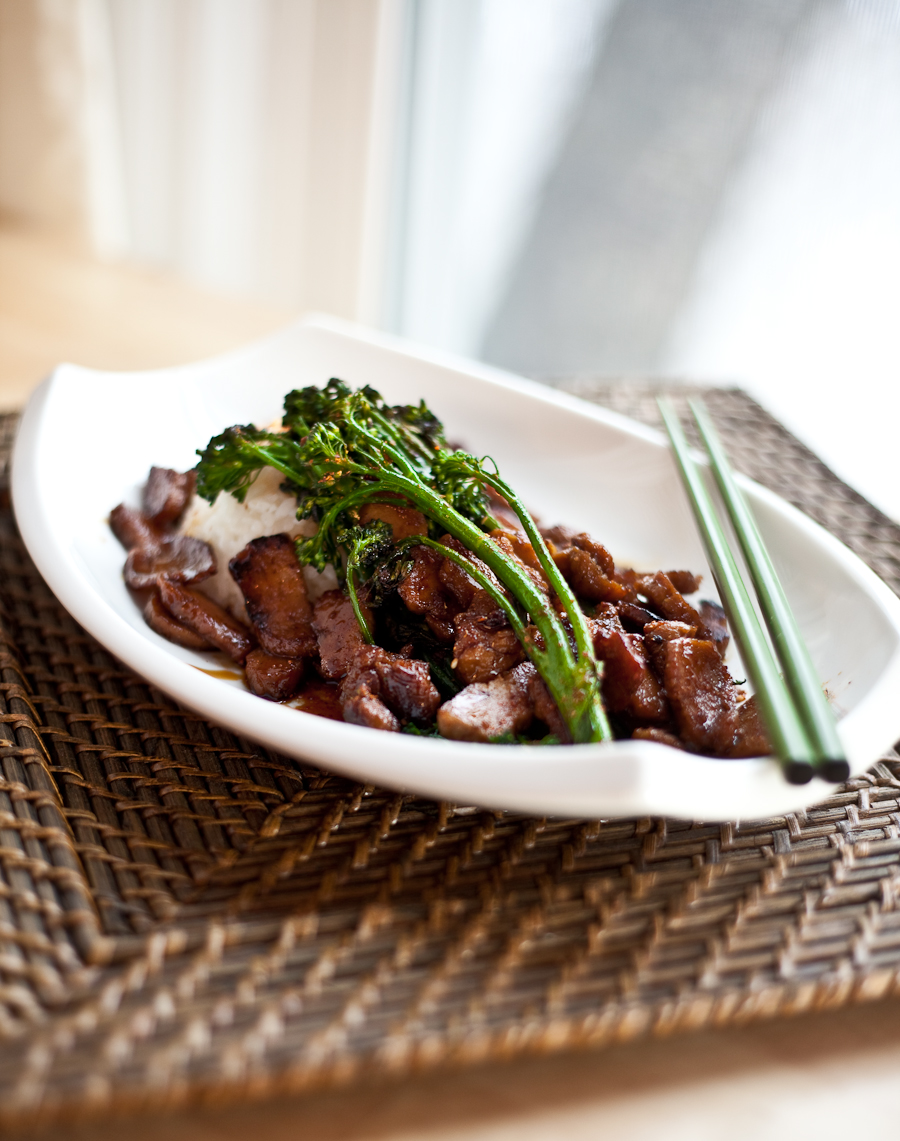
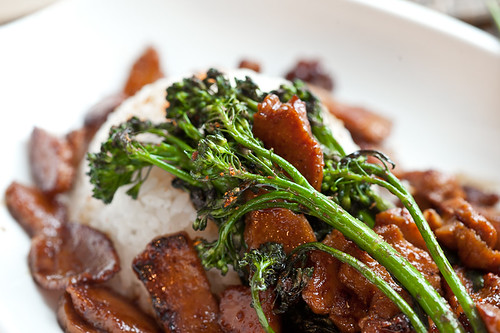
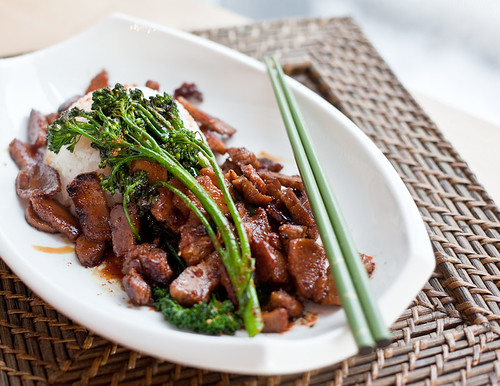
This is just your basic fried rice, but it has a secret ingredient (which is totally optional if you can’t find it and don’t want to grab it online). Japanese Seven Spice! Also called Shichimi Togarashi. Have you ever had this stuff? It’s totally awesome.
With a name like “seven spice” I’m sure you can guess that it’s made up of seven spices. They are: orange peel, black, white, and toasted sesame seeds, cayenne pepper, ginger, poppy seeds, Szechuan pepper, and nori. While the sesame seeds, nori, ginger and chilies are all very delicious, it’s the orange peel that really makes this spice mix for me. It gives it such a bright profile. I love this stuff on everything now, especially rice and noodle dishes.
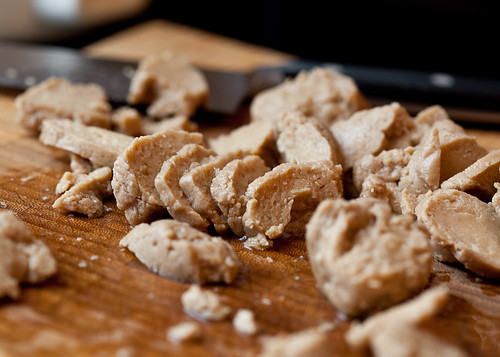
I also use Wildwood baked tofu in this dish, because (again) this dish is built for speed and ease. You can find it at Whole Foods, or get the seemingly-identical Trader Joe’s version. You can also use your own baked tofu, too. I recommend the Wildwood/TJs stuff; it’s really tasty, nice and firm, and it fries up all pretty-like.
Simple Fried Rice with Japanese Seven Spice Serves Two
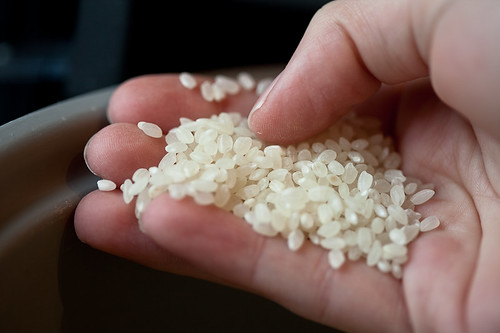
1 Cup Brown Rice, dry
2 Cups Water
1-2 Tbs Vegetable Oil
1 Package Wildwood Baked Tofu, sliced into rectangles (or whatever your favorite tofu is)
1 Stalk Broccoli, chopped into florets
2-3 Carrots, peeled and chopped into chunks
2 Tbs Earth Balance
2 Tbs Tamari or Soy Sauce
1 Tbs Rice Vinegar
Japanese Seven Spice, to taste
2-3 Tbs Toasted Almonds
Start the rice in your rice cooker.
Meanwhile, heat a wok (or skillet, cast-iron preferred) over medium-high heat with a teaspoon or two of oil. Add the tofu and pan-fry until golden on all sides. Remove to a bowl.
Add carrots, with more oil if needed, to the hot wok and cook until tender and browned in places, 5-8 minutes depending on size of chunks. Remove to the same bowl the tofu is in.
Add broccoli to the wok, again adding a little more oil if needed. Cook until bright green and tender crisp, 3-4 minutes. Add the tofu and carrots back to the wok. Cover wok and turn off or to low heat until the rice is done cooking.
When the rice is done, add it to the wok with the vegetables and tofu. Add 2 tbs of Earth Balance margarine, 2 Tbs of tamari (or soy sauce) and 1 Tbs of rice vinegar. Mix well and taste for seasoning.
Plate and top with a generous amount of seven spice and toasted almonds. Serve. I think this would reheat well if you wanted to bring leftovers to work.
I have both these brands. The Spice House one is a coarser mix, a little heavier on the nori, and therefore not bright red like the S&B. I was worried that the S&B would be much spicier, but it’s not. They’re definitely different styles of the same mix, but they’re both GREAT. The S&B is what is pictured on this dish.
I asked my twitter friends if they’d like to see recipes made for one, and the response was overwhelming; absolutely. A lot of you seem to make lunch for yourself, or have several weeknights where you’re cooking solo and want to throw something fresh together without a lot of hassel.
When I know I’m going to be eating alone, I rarely do the logical thing and make a big batch of something so I can have leftovers. I’m terrible with leftovers. I’m too fickle when it comes to food, so leftovers turn to science projects in the fridge. Therefore I tend to make a lot of one-off meals based on whatever odds and ends of produce I have left.
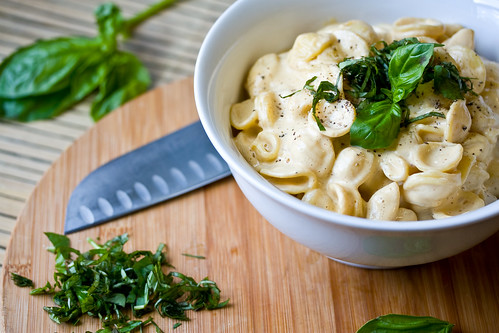
So here’s one of them. I had one serving broccolini, and half a pint of cherry tomatoes. Not enough of either to feed both me and my husband, so I made one little but delicious meal out of it. If you’re not cooking for one, this dish is easy to scale up, so don’t worry. But my friends who dine independently? This one is especially for you!
Annnd, how about a video? Here’s the whole meal, start to finish, in two minutes. A little overview, if you will. There’s nothing difficult about this recipe, so this is more for fun than anything. You can watch the whole video in HD, full-screen, even!
Broccolini, Cherry Tomato and Butter Bean Udon Serves One
1 to 1 1/2 Bundles Udon Noodles
Oil, about 2-3 Tbs
3-6 Stalks of Broccolini, depending on size
1/2 tsp Red Pepepr Flakes
Black Pepper
Salt
10 Cherry Tomatoes, quartered
1/2 Cup Butter Beans/Lima Beans, drained and rinsed
1-2 tsp Italian Herbs
Balsamic Vinegar, for drizzling
Heat a large pot of salted water to a boil. Add udon noodles and cook for four minutes (or as long as package directions dictate), then drain and rinse well. Coat lightly with oil to prevent noodles from sticking. I use spray oil for this, I think it’s the easiest and you use the least amount of oil. Set noodles aside.
Heat a large cast-iron skillet over medium high with a little oil. Add broccolini and coat with oil. Season with 1 big pinch of salt, black pepper, and red pepper flakes. Once the broccolini starts to turn bright green and get a little color (just a minute or two), push them to the edge of the pan.
Turn heat up a little and add quartered cherry tomatoes. Stir to coat in any oil/spices leftover from the broccolini, then let cook, untouched, to get a little color and soften up, 1-2 minutes. Once tomatoes are softened, add 1/2 cup of butter beans. Stir everything together and remove to a bowl.
In the still-hot pan, add a 1-2 Tbs more oil. Add cooked udon noodles to the hot pan, seasoning with a pinch of salt and italian herbs. Toss to coat the pasta. Once the pasta is coated and is heated through, add back the broccolini, beans, and tomatoes. Taste and season with more salt or pepper if needed.
Plate, and drizzle with balsamic vinegar if desired.
Tweet Tweet!
Feel free to follow me on twitter! Besides random daily updates, I tweet about upcoming blog posts, show sneak-peek photos of new recipes, and let you know the moment my blog has been updated. I do try to limit cat-related tweets, but I’m only human. And it is twitter, afterall. Say hello and I’ll say hi back!
It’s time to break out of our winter food ruts, and I think I have just the thing. Crêpes! They’re light and can be filled with almost anything, but to get your imagination started I’ve created three recipes for you to try.
Now, vegan crepes. They’re not hard once you get the hang of them. The recipe I’m posting here comes from a veganized version of a standard “Eggless Crepe” recipe that’s floating around on the interwebs. I just subbed soymilk and Earth Balance for milk and butter. I also think it needs a little extra water, and I’ll point that out in the recipe below. There is also a really good crêpe recipe in Veganomicon, if you have that cook book, but it calls for chickpea flour. If you have your own favorite recipe, use that! Whatever works for you will work here.
There’s a little video below to get you started if you’re new to crêpes.
The great thing about these is that you can make absolutely everything ahead. They heat up in minutes, so it’s perfect if you’re cooking bunch or lunch for several people who all want different fillings. Simply place the cold crêpe in the pan, put the fillings on top, heat through, and serve. I make extra crêpes and keep them in the fridge for quick meals for the next day or two.
So, the fillings!
Asparagus Hollandaise
Asparagus season is here or will be shortly, and this creamy hollandaise-ish sauce is perfect with spring-tender stalks. I just quickly pan-seared them so they’d have lots of flavor without overcooking them. You can check out my guide to buying and prepping asparagus if you like. The sauce has an almond base, so if you have good blender, you should be able to throw it together in minutes. Nutritional yeast is optional, but it does give it a nice pale yellow color and as well as some flavor. If you leave out the yeast, you might want to add a little turmeric for color.
Wild Mushroom and Wilted Frisée
I’m a sometimes-mushroom person. Sometimes I love them, other times I eat around them. I find the less-common mushrooms to be the tastiest. I used king trumpet and chanterelle mushrooms in this crêpe, and man were they delicious. Morels are coming in season, and they’d be wonderful, too. You’re welcome to use more standard mushrooms if you want (cremini, portabello, button), but these fancier ’shrooms were a real treat for me. I paired them with some wilted frisée (also called curly endive or chicory). It’s kind of bitter, but seems to mellow out with a quick sauté. It matches the mushrooms perfectly.
Berry Crêpes
I really wanted to use strawberries in this one, but alas, it’s not quite the season for them yet. The ones at my local store looked pretty sad. The raspberries, on the other hand, looked perfect. You can use any berry you like in these, along with a little sugar. The sugar melts a bit, making this crazy-easy dessert really very tasty. If you want, you can put a few tiny chunks of candied ginger in there as well. You don’t need berries at all; my absolute favorite all-time crêpe is a simple crêpe au sucre. Just sugar. Pure and simple.
Basic Crêpes Makes 8-10
1/2 Cup Soymilk
2/3 Cup Water
1/4 Cup Earth Balance, melted
1 Cup Flour
1/4 tsp Salt
1 Tbs Sugar (sweet crepes only, optional)
2 tsp Vanilla Extract (sweet crepes only, optional)
2 Tbs Water, to thin if needed
Place all the ingredients in a blender or in a bowl. Blend or whisk until smooth. Transfer to a 2 Cup measuring cup (for pouring) and refrigerate for 30 minutes. While the batter is refrigerating, prepare your fillings.
Asparagus Hollandaise Fills 2-3 Crêpes
1/2 Lb Thin Asparagus, trimmed
1 Tbs Earth Balance
1 Pinch Salt
Black Pepper
Heat a large skillet (I used then cast-iron skillet for all of the fillings) over high heat. Add Earth Balance and asparagus. Cook for a few minutes, until asparagus are bright green, tender-crisp, and are browning in spots. Add salt and pepper, set aside.
Hollandaise Sauce
1/2 Cup Sliced Raw Almonds
1/2 Cup Hot Water
2 Tbs Earth Balance
2 tsp Lemon Juice
1/4 tsp Salt
2 Tbs Nutritional Yeast, optional (or 1/4 tsp turmeric for color)
1/2 tsp Dijon Mustard, optional
Place all ingredients in a blender and blend until extremely smooth.
Wild Mushroom and Wilted Frisée Fills 2-3 Crêpes
2 Tbs Earth Balance
1 Cup Chopped Chanterelle Mushroms
1 Cup Chopped Trumpet Mushrooms
1/2 tsp Balsamic Vinegar
Salt
2 Sprig Fresh Rosemary, stem removed
1 Cup Chopped Frisée Greens
1-2 Cloves garlic, minced, optional
Slice trumpet mushrooms lengthwise, then lengthwise again.
Add the earth balance to a skillet over medium to medium-high heat. Add trumpet mushrooms and saute until beginning to brown. Add chanterelles and rosemary. Turn down heat to medium and cook for 5 minutes, stirring occasionally. Season with a pinch of salt and balsamic vinegar. Remove mushrooms from pan.
Add garlic and sweat until tender. Add greens and cook until just wilted, one to two minutes. Remove and set aside with mushrooms.
Berry Crêpes Fills 2-3 Crêpes
1/2 Pint Raspberries (or other berries)
Sugar
Berry crêpes are filled while the crêpes are still cooking. Add sugar and berries to the crêpe as soon as it is flipped. See below for more details about cooking the crêpes.
Making Crêpes
So now that you fillings are all prepared, and your crêpe batter has rested and chilled, we’re ready to make crêpes! I’ve made a video that outlines the whole process, but here are a few things you’ll need:
-A non-stick omelet or crêpe pan
-Cooking Spray
-A graduated spatula (the long flat kind you use for frosting cakes), optional
If your batter is too thick when it comes out of the fridge, stir in 2 Tbs of water to loosen it up.
So now you have a stack of cooling crêpes and fillings that have gone cold. No worries. You can keep your fillings in a warm oven until you’re ready to serve, or even easier, warm them up with the crêpes at the same time.
When you’re ready to eat, place a crêpe back in a hot skillet (medium heat is fine) and add the fillings you want in the top. Cover the whole thing and wait a few minutes. You want everything to get hot, but you don’t want to cook the crêpe any more than it is. When it’s hot, fold the crêpe in thirds and serve. It should only take 1-2 minutes per crêpe to heat up, so you can make them to order for your friends and family.
Okay! So are you ready to make crêpes? I hope so, because typing the little circumflex is getting really annoying. Making crêpes is much easier than accenting them correctly, I assure you.
I first encountered daifuku at one of my favorite restaurants in Western Massachusetts, Fresh Side. In their deli case were these cute little white and green pillow-looking desserts, sitting behind a hand-written card that said: Mochi (vegan).
I ordered one and when I bit into it, it was such a surprise. First, the texture! It’s like a dense marshmallow, chewy and soft. Sweet, but not overwhelmingly so. Next, the filling. Beans. Beans? Beans. This particular mochi was fillied with a sweetened red bean paste, also called anko, and I think it was the first time I had ever had sweet beans. And it was really good!
Now, if I understand correctly, mochi is a catch-all term for a sweet dessert made with glutenous rice flour dough. It can be baked, wrapped around ice cream, eaten plain, or filled. Filled mochi, like the ones I’m blogging about today, are called daifuku.
Anko is one of the most common fillings, but many people also use berries. Strawberry filled ones are very popular in the spring, and they’re called ichigo daifuku. Whole raspberries also work, and sometimes people include a white sweetened bean paste (as opposed to red) known as shiroan.
Now what if I told you that I made these in the microwave?
I know!
Really.
I was skeptical, too. The microwave in my house is pretty much reserved for reheating leftovers. When I decided to make these, I was sort of shocked that all the recipes online called for nuking the dough. What’s more, they were pretty unclear about how to tell when you’re dough is ready. Microwaves seem to vary so much in power, 3 minutes in one microwave is very different than 3 minutes in another. But I decided to give it a go, and not only did it work, but it was really, really easy. If you are able to find pre-made red bean paste, you can make this whole recipe with only a microwave and just a few minutes.
So not only do you not need a kitchen for these (hello dorm-living vegans!), they’re also gluten free (hi celiacs!), soy free (hi soy…allergic lovelies!), fast (hi lazy people!), customizable (hi picky people!), and did I mention CUTE? Traditional colors are white, green, and pink, but food coloring isn’t required if it grosses you out. Matcha (green tea powder) is a natural and delicious flavoring that makes the mochi green.
Now the one thing you absolutely need, no substitutions, is mochiko. It’s glutenous rice flour, and no other flour will work for this. You can find it easily at any asian market.
Also make sure you have some cornstarch or potato starch handy, the dough is very sticky!
Daifuku Makes 10-12 Filled Cakes
1 Cup Mochiko
1/4 Cup Sugar
2/3 Cup Water
2-3 Drops red or green food coloring, optional
Cornstarch or Potato Starch, for dusting
Filling Ideas
Anko (store bought or recipe below)
Strawberries
Raspberries
Anko Makes enough for 3-4 batches of daifuku
1 14 oz Can Adzuki Beans
1/2 Cup Water
1 Cup Sugar
1 Tbs Vegetable Oil
1-2 Pinches Salt
Heat water and sugar separately until boiling and sugar is dissolved, turn off heat. Drain and rinse beans.
Add to a pan and mash. Add 1/3 cup of the simple syrup you just made, along with salt and vegetable oil, and mash over medium heat. Beans will thicken and become slightly glossy. Add more syrup if desired. Turn out into a bowl and let cool.
Making the Mochi
Add the mochiko, sugar, water, and food coloring (if using) to a microwave safe bowl. Stir well, making sure there are no lumps. Scrape down the sides of the bowl as best you can with a rubber spatula, otherwise they’ll get all gross when the dough is microwaved.
Cover lightly with plastic wrap and mircowave for 2 minutes. Remove bowl from the microwave and stir VERY well. Dough will be much thicker, but there should still be some raw parts underneath. I like to use a sturdy silicone spatula to mix the dough at this point. Place the dough back in the microwave for 1 more minute.
Open the door and peek–did the dough start sinking as soon as the door opened? If so, the dough was inflating while cooking, which means it’s ready. If not, microwave for 1 more minute and check again. You shouldn’t have to microwave for more than 4 minutes total (2 minutes initial cooking, 2 more additional minutes after mixing).
One the dough deflates when you open the door, remove the dough from the microwave and scrape it out onto a cornstarch-coated cutting board.
Pat the hot dough (be careful! It’s hot!) with cornstarch and flatten it out a little. Cut into 10-12 even pieces. Add 1 tsp of filling to each piece and gently press the edges together to seal.
Here’s the whole process in a little HD video for you to watch! No sound, so don’t worry about turning down the volume if you’re at work. The video starts right after I took the dough out of the mircowave and dumped it onto the cutting board.
The best way to keep these fresh is to individually wrap them in plastic wrap and then refrigerate. If you leave them out, unwrapped, they’ll get dry and tough. Enjoy!
I really love vegetable tempura, but it often the batter contains eggs, so I have to skip it when I’m eating at a japanese restaurant. But it’s really easy to make eggless tempura at home. You can absolutely pick up a box mix of “tempura powder” at a local asian market and skip the egg the directions call for — even the box says it’s optional. Or, you can use this recipe and make your own batter from scratch.
When you see “serve immediately” at the bottom of this recipe, I’m not kidding. You want to have absolutely everything set and everyone ready to eat when the veggies come out of the oil. As the veggies cool, the once crispy breading will begins to soften, leaving you with soggy tempura. No fun. So make sure you have your place settings, your dipping sauce, and your friends or family ready to go once the veggies hit the oil.
The oil temperature needs to be 180º C or 350º F. If you add a lot of veggies to the oil at once, not only will they stick together (not so bad), but the oil temperature will drop like a rock (very bad). Tempura fried at too low a temperature will never become crispy. It’ll cook, but it’ll be a soft, heavy coating instead of a light, crispy one.
How can you tell if your oil is hot enough? When you drop a batter coated veggie in, little bits of batter will explode off the veggie outward like tempura fireworks. These bits, called tenkasu, are a good indication that your batter is hot enough. The veggies should cook for 40 seconds to 1 minute and feel crispy when you knock them around. You don’t need them to be golden brown, so don’t wait for that.
Most vegetables will cook to the perfect tenderness in that time, including harder ones like carrots if you keep their width to 1/4″ thick. For harder vegetables like squash or sweet potatoes, you may want to briefly blanch them to get them going before frying. But broccoli, mushrooms, and green beans or snap peas don’t require any pre-cooking at all.
I recommend a traditional tentsuyu dipping sauce for these. My recipe is a little different than the ones you find online, but it’s my favorite.
Vegetable Tempura Serves 2-4
1 Liter Vegetable Oil, for frying
1 Stalk Broccoli, florets only
2 Carrots, sliced on the bias, 1/4″ thick
1 Cup Mushrooms, your favorite
1 Cup Sugar Snap Peas or Green Beans
(Feel free to use any vegetables you like!)
Tempura Batter
1 Cup Cold Water (very cold!)
1 Cup Flour
2 Pinches Salt
1/4 tsp Baking Powder
1 Tbs Ener-g Egg Replacer Powder mixed with 3 Tbs Water
1/4 Cup Extra Water, if needed, for thinning
Tentsuyu Dipping Sauce
1/4 Cup Vegetable Stock, or Dashi if you have it
1 Tbs Sugar
1/4 Cup Low Sodium Tamari
1 Tbs Rice Vinegar
1/4 Cup Water
Heat all the sauce ingredients in a small pan until the sugar is dissolved. Set aside to cool.
Chop your vegetables, making sure harder vegetables like carrots are no more than 1/4″ thick if frying raw. Blanch vegetables like squash or sweet potatoes, if using.
Heat your oil to 350º F. A little bit of batter dropped into the oil should float to the surface immediately, and little bits of batter should explode off the veggies when frying.
Dip your vegetables in the batter.
Drop an assortment of battered vegetables into the oil, being careful not to overcrowd. You may need to turn up the temperature of the oil, because the vegetables will cool it.
Fry for 40 seconds to 1 minute until very crispy and light. Drain on a paper towel for a few seconds.
Serve immediately with dipping sauce and/or salt and pepper.