I think we’re being taken over by fried green tomatoes. I’ve never had fried green tomatoes before. I went to the farmers market, and there was a lovely and beautiful looking pile of green tomatoes. I had to buy them. HAD TO.
So I get home and I ask my twitter pals if they’re interested in a FGT post. A lot of people responded they were, and then I was led to Susan’s latest post of baked green tomatoes. Then I found out my landlord made some for dinner that same night. At least two more people said they’ve been thinking of making them. Clearly this is a conspiracy.
A tasty conspiracy.
As I said earlier, I’ve never had fried green tomatoes. I love tomatoes, but only when cooked. The idea of eating under ripe tomatoes on purpose freaked me out a little. But then I thought, hey, these are fried? What could possibly taste bad after frying?

When shopping for green tomatoes, it’s important to pick up under ripe, very firm, completely green tomatoes. They should be about the same size as a regular tomato. Smaller green tomatoes will taste bitter, and there are varieties of tomatoes (particularly heirloom varieties) that can be green and ripe at the same time, so make sure you don’t rely on color alone.
It’s a little disconcerting when you cut into a tomato and it sounds like a crisp apple, but that’s exactly what you want for this recipe.
After frying, they’re surprisingly tasty. They are sweet and tangy, still firm, and juicy–almost citrusy. The salty breading sets them off really nicely, and I topped them with a homemade balsamic glaze. They’re perfect for a light summer lunch or dinner when paired with some delicate baby greens, but they’re easy enough to make as a side dish.
Fried Green Tomatoes
Makes about 20 slices
4 Large, Under Ripe Green Tomatoes
Oil, for frying (peanut or canola)
Baby Greens, for serving
Cherry Tomatoes, for decoration
Balsamic Reduction (see recipe)
Breading Dry Mix
2 Cups Corn Flour/Meal
1/2 Cup All-Purpose Flour
1 Tbs plus 1 tsp Salt
1 Tbs Dried Italian Seasoning
1 tsp Fresh Cracked Black Pepper
Breading Wet Mix
1 Tbs Ener-G Egg Replacer Powder
3 Tbs Boiling Water
1/2 Cup Non-Dairy Milk
Core the green tomatoes and slice in to 1/2″ slices. If desired, season each side lightly with salt and pepper.

Lay tomato slices on paper towels and pat dry.
Mix together the dry seasoning mix and set aside.
Combine the boiling water and egg replacer powder and whisk until thick and foamy. Add to a separate large bowl. Whisk in the non-dairy milk until thick and frothy. Set aside. You should now have two bowls, one with the dry breading mix and one with the wet.
Heat a large cast-iron skillet until hot but not smoking with 1/4 to 1/2″ of oil in the bottom.
Dredge the tomato slices, four at a time, in the wet batter mix. Then place them into the bowl with the dry batter mix, pressing to make sure it sticks. Fry four at a time for 3 minutes a side, or until golden. Drain on paper towels.
Stack the fried green tomatoes on baby greens with sliced cherry tomatoes. Drizzle with balsamic reduction. Serve warm, while breading is still crispy.

August 15th, 2009
Stumble it!

Kuchen means cake in German. There are as many different kinds of kuchen as there are kinds of cake.
I saw this recipe for upside-down plum kuchen in the latest issue of Gourmet Magazine, and I just had veganize it. I’m glad I did, because the cake base of this kuchen might now be my favorite coffee cake base ever. It’s light and fluffy, and like my Slow Rise Pancakes, it uses yeast instead of baking powder or baking soda for leavening. I really love the clean, rich flavor of yeast-raised goods, so when I looked at this particular recipe I knew I had to make an animal-friendly version.
They used plums in the Gourmet version, so when I found tiny, sweet organic plums at the Copley Farmers Market here in Boston, it was kismet. However, I’m not sure I’d recommend you use plums in yours.

Here’s the thing. The plums themselves are very sweet, but I noticed a mild bitterness in the skins, even when I ate them fresh. After baking, the bitterness intensified. It’s not necessarily a bad thing, it’s similar to the bitterness of marmalade. If you really love the combination of sweet and bitter in a fruit, then go for the plums. If you’re not sure, choose another stone fruit; peaches or cherries would be completely divine in this. On second thought, I think nearly any bake-able fruit would be great.
Because this is a yeast-risen cake, it does take a while. Two hours for the first rise and ninety minutes for the second rise means this isn’t a fast dessert. If you’re looking for a quick coffee cake, try this crumb cake instead. But the flavor and texture of this kuchen really make all the time worthwhile.
Plum Kuchen (adapted from Gourmet Magazine, Aug 2009)
Makes One 9×9 Cake
1 Packet Active-Dry Yeast (2 1/4 tsp)
1/4 Cup Warm Water (105-110º F)
2 Cups plus 2 Tbs All-Purpose Flour, divided
1 Cup Sugar, divided
1/2 tsp Salt
1/2 Cup plus 1 Tbs Tofutti Sour Cream (or plain vegan yogurt)
2 tsp Ener-G Egg Replacer Powder mixed with 3 Tbs Hot Water
1 1/2 tsp Fresh Lemon Zest
1 tsp Vanilla Extract
1/2 cup plus 2 Tbs Earth Balance Margarine, divided
3/4 lbs Firm-Ripe Plums or other Stone Fruit, halved and pitted
Combine the yeast with the warm water and set aside to proof until foamy.
In a mixing bowl (one that fits in a stand mixer, if you have one), combine the yeast with 2 cups flour, 2/3 cup sugar, salt, sour cream, egg replacer, lemon zest, and vanilla extract.

Beat at low speed to combine the ingredients, then mix at medium speed for 5 minutes while adding in 1/2 cup of Earth Balance, one tablespoon at a time. Beat the batter for five minutes at medium speed until smooth and shiny, and very sticky.

After five minutes, remove the bowl from the mixer and top with the remaining 2 Tbs of flour. Do not mix it in. Cover the bowl with a non-terry cloth kitchen towel and set aside to rise for 90 minutes to 2 hours.
After the first rise, mix the the dough to combine the flour on the top.
With the remaining 2 tablespoons of Earth Balance, grease a 9×9 cake pan. Sprinkle the remaining 1/3 cup sugar in the bottom of the pan.
Halve and pit the plums. It may be easier to cut around the pits, rather than to pull them out, if your fruit is very ripe.

Slice the pitted plum halves into five or six slices. I left mine whole because they were very small. Place cut-side down into the sugar, covering the bottom of the pan.

Pour the dough over the plums and let raise for another 90 minutes, covered with oiled plastic wrap.

Preheat oven to 375º F.
Bake the kuchen for 35 minutes, until evenly golden and slightly cracked.

Remove from oven and let rest for 5 minutes. Loosen edges with a knife and turn out onto a rack to cool completely before serving.

July 29th, 2009
Stumble it!

This salad isn’t exactly… healthy. What it is, exactly, is delicious. And it has a surprise. There’s no lettuce. The greens are baby spinach, and raw kale.
Stay with me, here!
Yes, I said raw kale. I know you are thinking that I have finally gone off the vegan deep end. But I swear, the water is nice!
You can eat raw kale, too, if you pay attention to these three things: the kind, the cut, and the preparation. Follow these three steps and I swear you’ll be eating your kale raw and loving it.
Kind
The first step is finding the right kind of kale. Lacinato kale is perfectly suited to eating raw. I find that it’s thinner and more tender than the other varieties, but sadly, it’s not nearly as common. Look for long, thin, flat leaves that are slightly dimpled.

Cut
It’s not always obvious what the best cut is for a certain dish. Small, thin strips of kale is integral for this salad, or any meal where the kale is served raw or lightly cooked. When the kale is cut this way, the dressing has a much easier time tenderizing the kale without having to cook it. Larger pieces of kale would be much harder to eat.
Preparation
With regular lettuce, you wait to add the dressing until just before serving. Otherwise the salt and acid in the dressing starts to break down the fresh, crisp greens, leaving you with a soggy mess. With a kale salad, this is to your advantage! Dress the salad ahead of time and refrigerate it for a bit. The dressing will soften up the kale just the right amount. Plus, the addition of a creamy dressing compliments kale’s flavors nicely.

There are many fake bacon products out there. My favorite is what I’ve used in this recipe, Lightlife’s Smoky Tempeh Strips. While the package says “Fakin’ Bacon” I find that it’s not at all like what I remember of the real thing, but I still like it. It’s smoky and salty and tangy, and it’s AWESOME in this salad (or on sandwiches). But as awesome as it is, bacon it is not. If you’re looking for something that more closely approximates the texture and flavor of bacon, there are probably other brands out there, but I haven’t found one that I like.
One last note: due to the sturdy nature of kale, this is the perfect picnic and pot luck salad. You can throw it together ahead of time and it’ll be perky and crisp when you get around to serving it. If you’re looking for a side dish that can stand up to summer entertaining, this recipe is a good bet.
BLT Salad
4-6 Side Salads
1 Head Lacinato Kale (aka Tuscan or Dinosaur Kale)*
1 Package Lightelife Organic Smoky Tempeh Strips**
2 Tbs Peanut Oil, divided
1 to 1 1/2 Cups Baby Spinach, Packed
1 to 1 1/2 Cups Sweet Cherry Tomatoes (about 25)
Dressing
1/4 Cup Vegenaise Mayo
1 tsp Dijon Mustard
1/4 tsp Salt
1 tsp Lemon Juice
2 tsp Agave Nectar
Freshly Ground Black Pepper
*You can also use regular lettuce if you like, just make sure not to add the dressing until just before serving.
**Sub baked tofu, another mock bacon, or my Smoky Miso Tofu.
Wash and dry kale. Using kitchen shears (or a knife, or your fingers), remove and discard the center stem from each leaf. I find scissors makes the job quick and easy:

Stack the kale leaves on top of each other and slice into thin strips with a sharp knife:

Place the cut kale into a large bowl. Whisk the dressing together and toss with the kale until evenly coated. If you are using regular lettuce, keep the dressing separate until just before serving. Cover with plastic wrap and refrigerate for at least 30 minutes, longer is no problem.
Meanwhile, prepare the “bacon.” Slice the tempeh strips into thin, small pieces, and pan-fry in 1 Tbs peanut oil for about 5 minutes, or until golden brown and crisp on the edges. Drain on a paper towel and set aside:

Next, add another tablespoon of peanut oil to the same pan you cooked the bacon in (don’t wash it out!). Cook the tomatoes with 1/4 tsp salt for 3 minutes over high heat, or until beginning to soften and the juices are starting to come out. Remove to a bowl, with juices, and set aside.
Assembling the salad
Once you are ready to serve the salad, chop up the baby spinach and toss it with the kale, making sure everything is now covered in dressing. If you are using regular lettuce, mix in the dressing now. Add 3/4 of the bacon and the tomatoes and toss again. Plate, topping the salad with the rest of the bacon and some freshly cracked black pepper. Serve.

July 21st, 2009
Stumble it!

I thought I needed only one pancake recipe.
Man was I wrong.
Now, I’m not the plan-ahead type. It’s really a challenge for me to prep food for the following day; not only am I lazy, I’m also pretty fickle. My cravings can disappear nearly as quickly they arrive, so planning ahead doesn’t always work out for me.
But I have been making some bread recently, bread that starts off with a wet yeast dough that sits overnight to gain flavor. It’s a handy trick — you get some great flavor from the yeast without needing a sourdough starter handy.
The other morning I woke up at some unfavorable hour craving apple pancakes. Suddenly one part of my brain connected with another and I had it; yeast risen pancakes. It’s not an original idea by any means, I just don’t know why it hadn’t occurred to me until now. Not only would yeast risen pancakes have extra flavor added by using a slow-rising batter, but you could omit baking soda and baking powder altogether, creating a cleaner tasting pancake.
I knew they were going to be good, but I had no idea how good.
I mean, I really think these are the best pancakes I’ve ever had. They are most certainly the best pancakes I’ve ever made.
If you can get yourself to stir the simple batter together the night before and toss it in the fridge, I think you’ll thank yourself the next morning for your forethought and dedication to a delicious breakfast. These pancakes won’t let you down.
Slow Rise Pancakes
Makes 8 thick 5″ pancakes
2 Cups All-Purpose Flour
2 1/4 tsp Active Dry Yeast (one packet)
1 tsp Salt
2 tsp Sugar
1 1/2 Cup Soymilk (or other non-dairy milk)
2 Tbs Oil
1 Ener-g Egg, prepared (1.5 tsp mixed with 2 Tbs water)
1/3 Cup Soymilk, for thinning the next morning, if desired
Whisk all the dry ingredients together until well combined. Add the rest of the ingredients (except the 1/3 cup of soymilk) and mix well. Cover with plastic wrap and refrigerate overnight. Use batter anytime the next day.
Once you’re ready to make pancakes, remove the batter from the fridge and stir in up to 1/3 cup of soymilk to thin it if needed/desired. Let the batter sit out on the counter for 20-30 minutes. Heat a non-stick pan over medium heat. Spray with spray oil and wipe out the pan.
Using a 1/3 cup measure, begin making pancakes. I added apple slices to the batter before it set:

You can add anything you fancy: blueberries, chocolate chips, bananas, strawberries, etc.
Once the top is bubbly and the edges are set, check to make sure the bottom is brown. Flip:

Cook on the other side for another few minutes until browned. Stack pancakes in a low oven to keep warm, serve with earth balance margarine and maple syrup.
——
Thanks for forgiving me a little break in posting, this quick little recipe is a way for me to get back into the swing of blogging. And also thanks to VegNews for nominating me for the 2009 Veggie Awards! If you’d like to vote for my blog, and have a chance to win some cool prizes, click the banner below. Thanks for your support!

July 2nd, 2009
Stumble it!

Sorry for the absence, I got pretty sick and needed to take some time off from… everything. Before asparagus season passes us by (it will be gone before you know it!), I thought I’d offer up this simple but flavorful and beautiful side dish.
There are lots of times where I’d like to make a little side dish, but I just don’t want to work too hard at it. Here’s a great recipe for just such an occasion. It’s fancy enough for company, but easy enough for everyday dinner. I first got the idea when I tossed some asparagus in a powdered faux-chicken soup stock and then roasted them. It gave the asparagus a lovely flavor, while helping the spears get golden brown and slightly crispy.
The bare-bones version of this recipe is just tossing the asparagus in oil, a little soup stock powder, and roasting until tender. This version here is the next-step, adding just a few ingredients for a lot more flavor.

Chili Almond Asparagus
Serves two to four as a side
1/4 Cup Sliced Almonds, roughly crushed and divided
1 Tbs Powdered Soup Stock (I used Bill’s Chik’nish Seasoning)
2 tsp Red Chili Flakes
1 lb Asparagus Spears, trimmed
2 Carrots, peeled
2 tsp Peanut Oil (or any kind you like)
1 tsp Toasted Sesame Oil (or any other kind)
Fresh Zest and juice of 1 Lemon
Preheat oven to 450º F.
Roughly crush the almonds so that most are ground fairly fine, but there are some larger pieces of almonds left in the mix. Mix together 1/2 of the ground almonds, the soup stock powder, and the chili flakes.
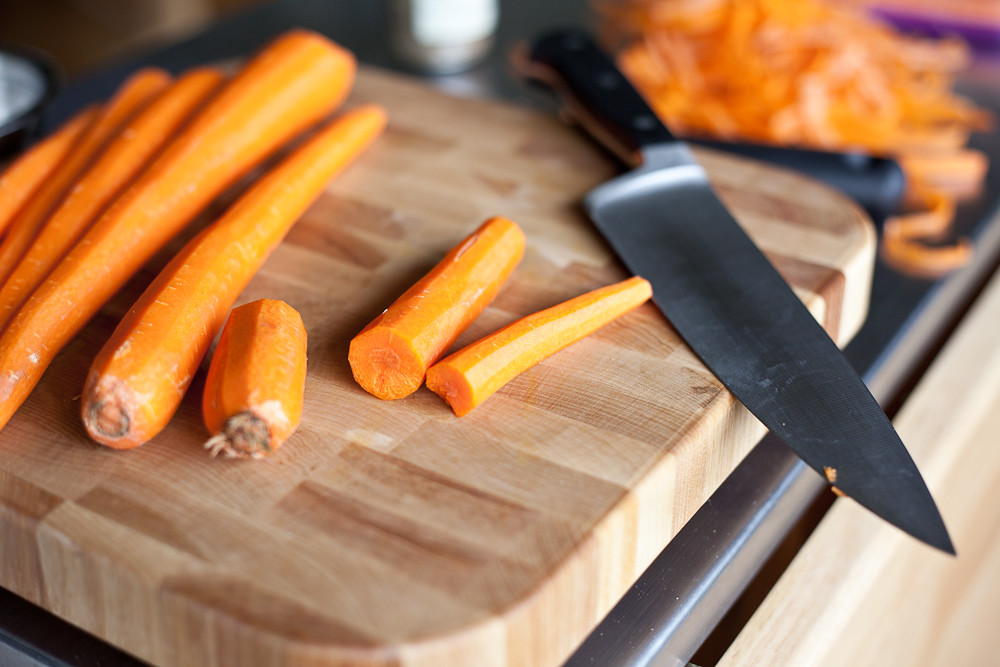
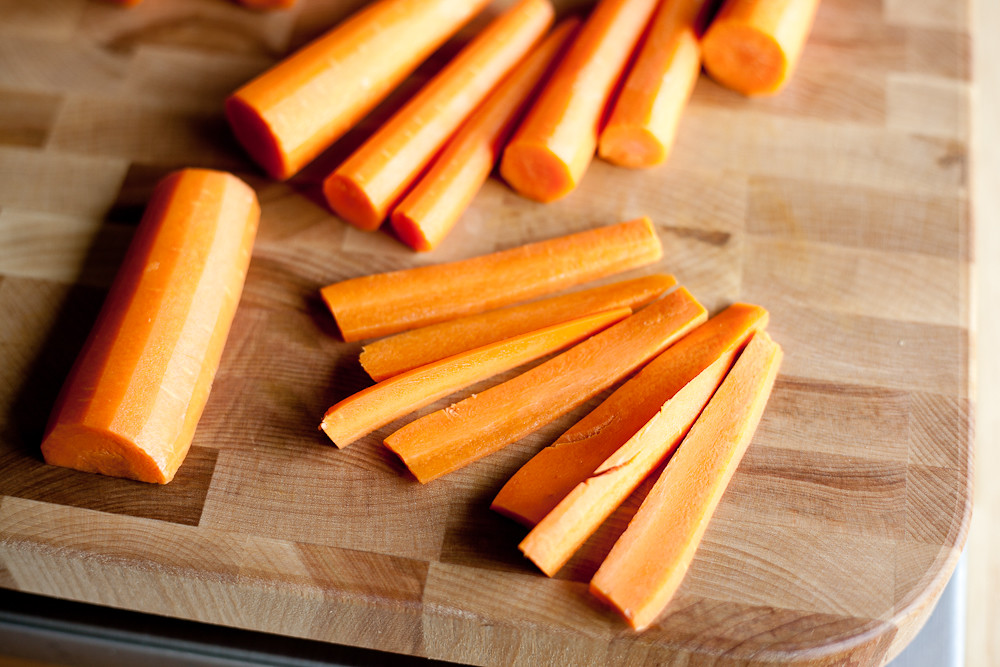
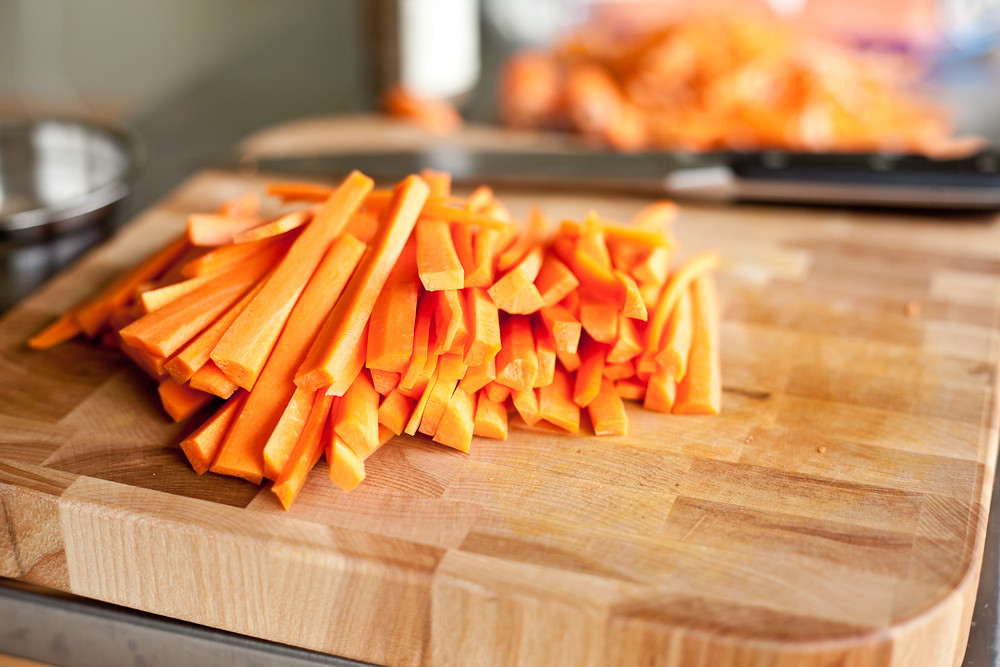
Trim the carrots to the same length, roughly, as the asparagus spears. Half the carrots lengthwise, then quarter them, and continue cutting each piece lengthwise until you have lots of long, flexible, thin strips of carrots.

In a large bowl, toss the carrots and the asparagus spears in the oils. Sprinkle the almond seasoning over the asparagus and carrots and toss well, making sure the coating sticks to the veggies.

Arrange the veggies in one layer on a parchment covered baking sheet. If there is any seasoning left in the bowl, scrape it onto the veggies.

Bake for about 5 minutes, or until the veggies are tender and starting to color. Finish under the broiler for a few minutes (watching it, it’ll burn easily) until brown and crispy in places.
Top with the remaining almond pieces, lemon zest, and season with a sprinkle of lemon juice if desired.

This is best served hot/warm. The asparagus should be cooked through and tender, but not mushy. It’s a perfect compliment to any spring dinner or lunch.

May 27th, 2009
Stumble it!
Next Posts
Previous Posts