Posts filed under 'soup'

This isn’t a traditional wonton soup. I suppose a vegan wonton soup wouldn’t really be considered traditional anyway, but I really took some liberty with the recipe. The wontons are stuffed with one of my favorite greens, Chinese broccoli, and chopped seitan. I tossed the filling in a chili-mustard sauce for a salty, spicy kick. The slight bitterness of the Chinese broccoli really balances the piquant heat of the dressing, creating a really yummy dumpling.
I wanted the wontons to be the star here, so I made a very light ginger-soy broth to float them in. I only covered the wontons about half-way with the soup base, so really, this isn’t so much a soup as fresh dumplings lightly dressed with an aromatic broth. In fact, the broth is quite plain on its own, but it works very nicely with the flavorful dumplings.
Chinese broccoli is fantastic, and if you’ve never had it, I wholly recommend a search of your nearest Asian grocer to find some. It’s a vegetable chimera of all of my favorite things; the florets of broccoli rabe, the stems of asparagus, and leaves like tender collard greens. It has a mild flavor with a sweet and slightly bitter bite, and it’s perfect for stir-fries or any other hight heat/quick cooking method. It’s also quite good for you, and its complex (but not overwhelming) flavor is a nice change of pace from regular broccoli or simple spinach.

Folding wontons isn’t hard, so as long as you can find the wonton skins, you’ll be good to go. The brand I used here is called Twin Marquis, and I know they make both vegan and non-vegan wonton skins and gyoza wrappers. Look for the white (not yellow) square wrappers. The round ones are gyoza skins, much better for pot stickers; even though they’re similar, they’re a good deal thicker than the wonton skins. Either way, check the label for eggs.
If you have leftover wonton skins, you can make extra wontons and freeze them in one layer on a cookie sheet, then transfer to a freezer bag for long-term storage. Just drop them directly into boiling water when you’re ready to cook them. You can also wrap the skins up tightly and store them in a fridge for a day or two. Fill them with anything you like (spinach and tofutti cream cheese? Tempeh sausage?), fold in half and seal shut. Pan fry them in 1-2″ of oil until cripsy and golden brown on both sides. It’s a wonderfully tasty and quick appetizer or snack.
Chinese Broccoli Wontons in a Light Ginger-Soy Broth
Serves Four
16 Wonton Skins
Filling
1 Tbs Oil
1-2 tsp Fresh Ginger, minced
1 Cup Chinese Broccoli, thinly sliced
3/4 Cup Seitan, chopped fine
1/2 tsp Hot Chili Sauce, more if desired (like Sriracha)
1 tsp Dijon Mustard
1 tsp Tamari or Soy Sauce
Ginger-Soy Broth
4 Cups Water
5-6 Fresh Ginger Slices
1 Tbs Mirin
2 Tbs Tamari (or soy sauce)
1 1/2 tsp Sugar
2 tsp Rice Vinegar
1/2 tsp Salt, plus more to taste
1/4 Cup Chinese Broccoli Leaves, packed (sub: spinach or collards)
Filling: Begin by chopping the Chinese broccoli very thinly with a sharp knife, from the base of the stem up towards the leaves (just like chopping scallions). Heat a large pan with oil and add the ginger. Once the ginger becomes fragrant, add the broccoli and seitan, stirring well and cooking until the broccoli is bright green and tender-crisp.
Transfer the broccoli-seitan mixture to a small bowl and toss with the remaining ingredients. Taste and adjust to your liking. Set aside while you make the broth.
Broth: Heat all of the broth ingredients together except the greens in a small sauce pan, until sugar and salt is dissolved and the ginger has had time to infuse into the broth. Taste and add more salt if desired, but remember this is a mild broth that is only meant to be a complement to the wontons. Once the broth has begin to simmer, turn off heat and toss in greens. Cover and set aside.

Fill the wontons: Place 1-2 tsp of filling in the center of the wonton. Wet the edges of the wrapper with water (a finger dipped in water works great) and seal into a trianlge, removing as much air as possible from the dumpling. Make sure edges are secured.
Set the triangle in front of you, pointing up. Wet one of the bottom corners. Hold the corners, one between each thumb and forefinger. Begin to bend the wrapper, as if you were forcing it into a horseshoe shape. Don’t change your grip, and resist the urge to fold the corners over. Bring the two ends together, crossing them slightly, and press to seal. Going from the triangle shape to a completed wonton is one fluid motion.
Your dumpling should look like a fun little fish-boat-hat. Like this:

You can now freeze your dumplings, or cook them right away.
To prepare the soup: Bring a pot of salted water to a boil. Re-heat your broth to steaming, if necessary. Gently lower the wontons into the boiling water and cook until they become translucent, about 2-3 minutes if the wontons aren’t frozen, longer if they are. Remove them from the water with a spider (or other slotted spoon device) and place them into the hot broth.
Take care to remove and discard any dumplings that have opened up during cooking. If they open, water gets inside, washes all the flavor away, and you’ll be sad if you serve it or eat it. It will taste like watery mush, and I promise you won’t be happy about it.
Ladle 3-4 wontons into a bowl and add a small amount of broth, enough to half-way cover the wontons. Make sure to get some greens in there, too. Serve immediately.

March 5th, 2008

I’ve been thinking about flavor. More specifically, how to get the most flavor out of each ingredient used in a recipe. This is especially important when you want to make a meal and only have a few things on hand. If you can make each ingredient really count, it doesn’t matter if your only throwing a handful of them together.
(Can you tell I need to make a trip to the grocery store really, really badly?)
The recipe I’m going to use as an example of making your ingredients count is a simple minestrone. Before I made the soup I asked myself, “So what technically makes a minestrone?” The answer turned out to be “Almost whatever you want”–which makes it the perfect soup to make when you find your fridge a little more bare than you’d prefer. Minestrone started as the classic “garbage soup.” I prefer to call it these kinds of soups “clean out the fridge soups” myself. The idea is that you do not go grocery shopping to make minestrone. You use whatever you have on hand, be it extra vegetables, canned goods, frozen things, or leftovers.
So how did I get the most out of the ingredients I had?
Caramelized Onions
The extra time put into caramelized onions really pays off. The longer you cook them, the more complex their flavor becomes. I saute my onions for at least 10 minutes in olive oil, until they are a lovely reddish-brown and very soft. It is SO worth the extra few minutes of cooking before you proceed with your meal. Spend the 10 minutes prepping your other veggies to make the rest of the meal go smoothly and quickly.
Canned Tomatoes
Keep a stock of canned tomatoes, if you don’t already. If you buy stewed or fire roasted tomatoes, you already have a leg up. These tomatoes are already partially cooked and have a lot of flavor in a convenient package. Unless it’s mid-summer and I have gorgeous vine-ripened tomatoes, I always go for the canned stuff. It’s easy, cheap, consistent, and tasty. At the risk of sounding like Rachel Ray, it really does help you get “all day flavor” in just a few minutes.
Herbs and Spices
I rarely have fresh herbs available (they’re expensive and I’ve failed at growing my own), but when I do, I try to get the most out of them. Don’t add fresh herbs until the very end of cooking. The delicate flavors will be most enjoyable if you toss your freshly chopped herbs in at the end of whatever you’re making. The residual heat from the dish is enough to carry the flavors through. This applies to pepper, too. Try out fresh cracked pepper, from whole peppercorns, added at the end over your dish. You’ll be astounded at the difference in flavor compared to pre-ground pepper.
How many dishes do you make that start with a bit of oil heated in the pan? If you’re using dried herbs or other spices, try throwing them in at the very beginning, in the oil. Tossing dried herbs and spices into oil and sauteing for a minute or so (longer with whole spices) flavors the oil itself and brings a whole new dimension to your cooking. The majority of Indian dishes start this way, and for good reason.
Salt and Vinegar
I admit that I’m a bit of a salt whore. I love it. But it really is amazing stuff. It doesn’t just make things salty, it actually enhances other flavors. I can taste all the other flavors in my dish much better when it is sufficiently salty. Even pasta cooked in salted water tastes better to me.
I also use vinegar in conjunction with salt. I use the term vinegar loosely to mean nearly anything that’s sour. I keep balsamic vinegar, white wine vinegar, rice vinegar and apple cider vinegar on hand at all times, but lemon juice works great on it’s own in many occasions. Vinegar can be a lifesaver if you over-salt something by accident, but I like to use salt and vinegar together to really punch up a dish’s flavor. They’re a great team. If your dish needs a little “something” and you don’t know what that is, try salt and/or vinegar and see where that gets you. I think it’s easiest to balance the flavors if you add the salt before the vinegar.
Minestrone Soup
Serves 4
Olive Oil
1 Sweet Yellow Onion, diced
1-4 Clove(s) Garlic, minced
1 Can Stewed or Fire Roasted Tomatoes (15 oz), blended
1 Large Carrot, diced
6 Cups of Hot Water or Veg Stock
1 Tbs Tomato Paste
1 Bay Leaf
1/4-1/2 tsp Celery Salt
2/3 Cup Elbow Macaroni
2 Cups Kale, packed
Salt to Taste (I used 1 1/2 tsp)
1/2 Cup Frozen peas
2 Tbs Fresh Herbs (I used marjoram and rosemary, 1 Tbs total after chopping)
Lemon Zest
Black Pepper
Add a few tablespoons of olive oil in the bottom of a soup pot that has a lid. Heat oil and add onions. Cook over medium heat, stirring occasionally, for 10 minutes. In the last minute of cooking, add the garlic.
Tip for mincing garlic: After removing the skin (smash it lightly with the flat side of your knife to do that), chop the garlic with a pinch of salt. The salt acts as a tenderizer and the friction of the granules break down the clove to help you achieve a fine mince.
Add the tomatos to the onions and garlic and simmer for another 4-5 minutes. Add the carrot and the water/broth and bring to a boil. Add the tomato paste, bay leaf, and celery salt cook until the carrots begin to soften. Then add macaroni and stir often, making sure it doesn’t stick to the bottom of the pan. Add kale.
Add salt to taste. I used water, and therefore added 1 1/2 tsp of salt. If you used vegetable broth or bullion, you may not need this much salt. Simmer, covered, until the pasta is cooked. Add the peas at the end, they’ll defrost in a matter of seconds. Turn off heat, add fresh herbs.
Ladle soup into bowls and grate some lemon zest over the top of each serving. Sprinkle pepper over the top.

December 12th, 2007

Consider the unloved rutabaga. It’s a cross between a turnip and a cabbage, two other frequently skipped-over veggies. If Frumpy and Unloveable had a root vegetable baby, it’d be a rutabaga. Like most winter vegetables, they store very well after harvesting. This means you can usually find rutabagas year round. As far as I can tell, this is why they’re unpopular.
Rutabagas were one of the only available foods during WWI in many countries, because they’re easy to grow and easy to store. They soon got a reputation as being “famine food” and many, many people had simply eaten too many of them. This dislike was so strong that even people who have never been forced to live off of rutabagas revile them. Ask someone in the US if they like rutabagas, and they will probably say no. Ask that same person if they’ve ever had one, and they’ll probably say no to that, too.
Granted, I’m sure there are people out there who have given rutabagas a fair shot in recent memory and still dislike them. But there’s no way everyone dislikes them. In fact, you might even like them! Even if you don’t know it yet.
Now I really like the word “rutabaga”. It’s fun to say. Maybe that’s why I gave them a chance. I have a theory that we need to stop calling them rutabagas if we want people to try them. But maybe it isn’t the name? Maybe everyone loves the word rutabaga and the problem lies elsewhere? I decided to do an experiment on my husband:
Me: Vegetable aside, what does just the word “rutabaga” make you think about?
Husband: A car part, like a carburetor.
Me: Hmm.
Husband: Or some kind of rickshaw.
Clearly the name needs to go.
I propose we call them what nearly every other country calls them: swedes. It seems to me that the majority of people out there who like rutabagas don’t live in the US and therefore don’t call them rutabagas. If you’re ever searching for recipes for them, search for the word “swedes” as well and you’ll get a whole different set of recipes.
Swedes can be used a slew of different ways. They’re nice boiled and mashed, like potatoes. A popular dish, called rotmos, is a mix of mashed rutabagas, potatoes and carrots, seasoned with butter and salt. You can roast them, fry them, saute them, or eat them raw. They’re generally sweet with a mild turnip like flavor, and they smell like fresh cabbage. I think they’re quite delightful.
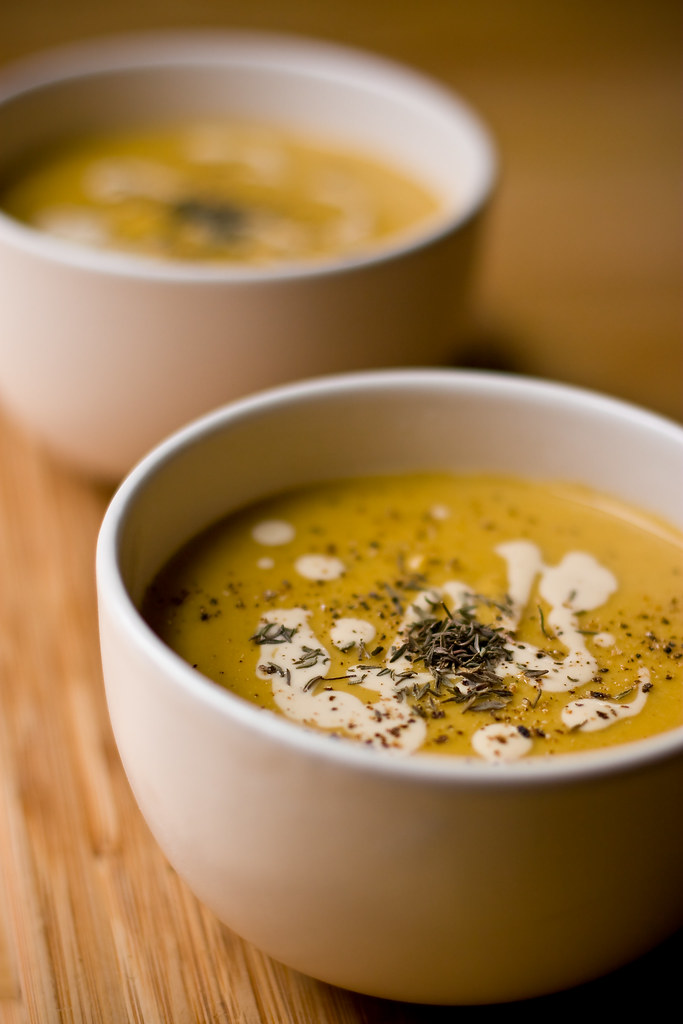
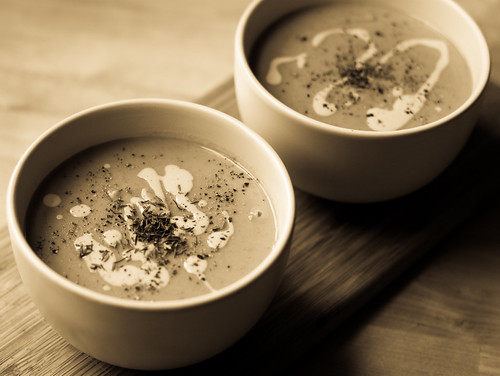
If you’re going to give them a try, but don’t know where to start, you can try the soup I threw together today for lunch. Almost everything in it is roasted first, which gives a nice, rich flavor. I think it’s a safe way to experiment with swedes. If you’re not digging it as a soup, add some earth balance, nutritional yeast, and more salt and it makes an interesting and creamy pasta sauce. I often do that with the leftovers the next day.
Oh, and as an added bonus, this recipe is soy free!
Swede Potato Soup with Fried Spaghetti Squash and Toasted Pepitas
Serves two
Roasting the Vegetables
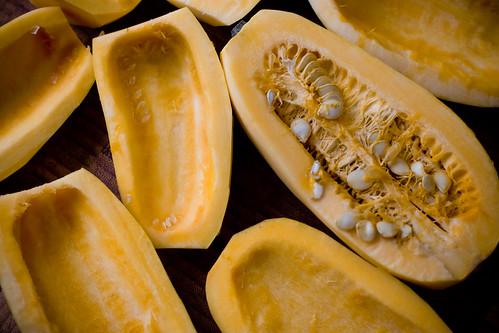
1 Spaghetti Squash, halved and seeded (for garnish, but you’ll have leftovers)
1 Head Garlic
2 Cups Rutabaga, peeled and diced
1 1/2 Cups Sweet Potato, peeled and diced
Oil
Salt
Pepper
Preaheat oven to 400º F.
Rub squash with oil and place cut-side down on a roasting pan.
Cut the top off the head of garlic and remove the papery skin, reserving the skin on the cloves themselves. Drizzle with oil and wrap in aluminum foil. Place on the same baking sheet.
Coat the rutabaga sweet potato in oil, and sprinkle with salt and pepper. Add these to the baking sheet.
Bake for 50-60 minutes until everything is golden, soft, and well-roasted. Allow garlic to cool a bit before opening the foil package.

Making the Soup
1/2 Onion, chopped
Roasted Sweet Potatoes, from above
Roasted Rutabaga, from above
1/2 Cup Cashews
2 Cups water, more if needed
1 Bullion Cube
1 Pinch Nutmeg
1/2 tsp Dried Thyme
Roasted Garlic, from above, as much as the whole head if you’re brave
Squeeze the roasted garlic out of the head and reserve the paste. If you’re not using all of it, you can freeze it in an ice cube tray and add it to recipes as you wish.
Saute onion until very soft and caramelized, about 10 minutes. Blend all of the above ingredients in a high-speed blender until smooth. If you’re worried your blender will not blend the nuts completely, you can sub soy or coconut milk for the water and skip the nuts, and/or strain the soup. It’ll taste a little different, but it’ll still be delicious. Add water as desired to get preferred thickness.
Making the Garnish, optional
1/4 Cup Pepitas
1/4 Cup Roasted Spaghetti Squash, see above
2 tsp All Purpose Flour
1 Pinch Salt
Oil
Heat a small amount of oil in a cast iron pan over medium heat. Add pepitas and cook until browned. Be careful, they may pop and fly around while cooking. Remove to a bowl to stop the cooking and set aside.
Scrape out the roasted spaghetti squash into bowl with a fork. Roll the strands in a paper towel or clean kitchen cloth and squeeze out as much moisture as you can. Replace squash in the bowl, add a pinch of salt and the flour and mix well.
Heat a cast-iron pan over very high heat with some oil. Spread out spaghetti squash in a thin, lacy layer and let brown on both sides until, until crisp. Drain on a paper towel.

November 7th, 2007

I never know what the hell to do with cabbage. The options always seem to be cole slaw (which I don’t ever want or feel like an entire cabbage worth of), sour kraut (see cole slaw), or some sort of cabbage salad, usually involving ramen noodles (which I like, but only sometimes).
Today I found myself with a cute little organic cabbage in my refrigerator, but not much else. I also had some baked tofu and some carrots, and after looking in the fridge a million times, I had an idea for a soup. Somewhere in my brain lived this soup - a light tomato base, with sweet and sour and spicy flavorings. I can’t think of where I might have tasted something like this in the past, but there it was. Who was I to argue? It used the damn cabbage, didn’t it?
I’m really pleased with the results. It’s a really comforting, warming winter soup. If you have extra ingredients on hand like bell peppers, mushrooms, or zucchini, feel free to add them in. I gave it a billion grinds of black pepper to finish it, and it really brought everything together. Seasoned rice vinegar is the sour flavor here, but if you only have regular rice vinegar, you can make a substitution as follows: One cup of seasoned rice vinegar is the same as 3/4 cup white rice vinegar plus 1/4 cup sugar plus 2 teaspoons salt. That’s what the internet told me, I haven’t tried it myself!
Hot and Sour Cabbage Soup
Serves six?
1 Tbs Oil
1 Small Onion, minced
1 Small Cabbage, about the size of a grapefruit
2 Large Carrots, chopped
1 15oz Can Tomatoes, blended smooth
6 Cups Water
1 Cup Cubed Pressed, Baked Tofu (like wildwood baked)
1/4 Cup Tamari, low sodium
1/3 Cup Seasoned Rice Vinegar (see note on substituting above)
1 tsp Hot Red Chili Flakes
1/2 tsp Salt
Black Pepper, to taste (a lot!)
Heat a large 5 qt soup pot that has a heavy lid over medium heat. Add oil and onion, and saute until golden. Meanwhile, quarter your cabbage, remove the core, and shred the cabbage with a large chef’s knife. Add carrots, tomatoes, cabbage and water to the pot and stir well. Add the tofu, tamari, vinegar, chili flakes and salt. Bring to a boil, cover, then turn heat down to medium low. Simmer for 20 minutes or until cabbage and carrots are the desired tenderness.
Grind a lot of fresh black pepper over the top and serve.
October 16th, 2007

I made this in 20 minutes, and that included time to straighten up a bit. My lunches can get a bit weird sometimes, as I tend to rummage around and try to make something that uses up the food we have. Here’s what I found today:
.
So why not chili with apple and sausage in it? The only things I used that aren’t pictured here are tamari, worcestershire sauce, and cumin. I saw the “grain meat” sausages at Whole Foods and they intrigued me. They ended up being pretty good, but towards the end I was eating around them. Maybe I’m just a tofu/tempeh/seitan kinda gal. I’d be interested in trying their other flavors, since the apple-sage variation sounds tasty.
Chipotle Sausage Chili with Apple and Black Beans
Makes two hearty servings
1 Can Black Beans, mostly drained
2 Carrots, peeled and roughly chopped
2 Plum Tomatoes, diced (1 Cup, scant)
1 Cup Rehydrated TSP, see directions
1 Veggie Sausage Link, diced
1 Apple, diced (any kind, really)
3 Tbs Tamari
3 Tbs Worcestershire Sauce (make sure the label says it’s veg)
1 tsp Cumin
Heat 1 scant cup of water to boiling and mix it with 1 Cup dried TSP (or follow package directions). While that is soaking, heat a large skillet with some vegetable oil. Add carrot and stir every once in a while to soften. Meanwhile, dice apples, tomatoes, and sausage. Add these plus the beans and cumin to pan. Stir and cover.
Check on your TSP. Dump out excess water as soon as it is fairly soft and add to pan. Add tamari and Worcestershire sauce, stir well, and cover. Let simmer on medium heat for 5 minutes. Serve with fresh cilantro or parsley.
March 30th, 2007
Previous Posts