Posts filed under 'sauce/dressing'

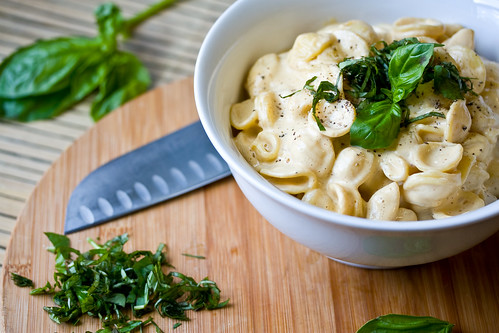
There are innumerable recipes for vegan mac and cheese on the internet. I’ve tried a lot of them. Some of them simply call for “slices of soy cheese” and some vegetable stock to be mixed over pasta. The majority, however, require nutritional yeast, and they usually also require making a roux. The recipe below is from my upcoming cookbook, and it’s one of my favorites. However, if you’ll indulge me for a moment, there are some things about vegan mac and cheeze I want to talk about.
Now, I’m the first to admit “Mac and Yeast” doesn’t quite have the same ring to it. That’s why I tend to call it “Mac and Cheeze”. But I’m also the first to admit that these recipes, even the best of them, don’t really taste all that much like mac and cheese. Some get much closer than others, and a lot are downright tasty. But it’s not cheese. Your omnivore or veggie friend/spouse/child may love it as much as or even more than the real stuff (if you’re lucky), but they probably love it on its own merits, not because they really can’t tell the difference.
But you know what? It doesn’t have to taste exactly the same for me to love it.
A lot of people, myself included, are really interested in making vegan food that’s indistinguishable from the “real” thing. It’s a fun challenge, and oftentimes, a challenge where you can really and truly be successful. But there are many instances where you don’t create something identical, but what you do create is actually good. Different, but yummy. While vegan mac and cheese doesn’t taste exactly like non-vegan mac and cheese, it satisfies the same craving. It’s rich and creamy and salty and vaguely cheese-like. It’s a yummy, thick creamy sauce to top noodles with.
I think that sometimes it’s enough to satisfy your cravings with something similar, if you can’t find something identical. After three years of being vegan, I don’t even crave mac and cheese anymore; I crave mac and yeast.
I think expectation is important with food. If it looks like a grape, you expect it to taste like a grape. If I hand you a glass of sparkling wine and tell you it’s gingerale, you might be put off when you take a sip. You might even like wine, but you expected it to be, well, not wine. If I say, “here, try this mac and cheese” and give you mac and yeast, you might be disappointed when you tasted it. If you’ve never tried a mac and yeast recipe before, and you want to try this one, keep in mind that it doesn’t taste like cheese.
It just tastes like yummy. Well, it does to me and the vegans that tested the recipe for me!
Mac and Cheeze
Serves 2-3
1/3 Cup Earth Balance Margarine
1/4 Cup All Purpose Flour
2 1/2 Tbs Low Sodium Tamari or Soy Sauce
1 Tbs Lemon Juice, fresh
1 Tbs Sweet/White/Mellow Miso
1 Tbs Tahini
1 Tbs Tomato Paste (not sauce!)
1 1/4 Cup Soy Milk
1/3 Cup Nutritional Yeast
1 Pinch Salt
Black Pepper, to taste
Begin by heating a sauce pan and adding the earth balance. Once melted, add flour and whisk vigorously until a smooth paste forms, called a roux. Be careful not to add flour to a pan that is very hot, or your roux will be lumpy and you’ll need to start over. If you mix in the flour as soon as the margarine is melted and you should avoid any problems.
To this paste, add tamari, lemon, miso, tahini, and tomato paste and whisk until well incorporated. The mixture should still be paste-like. Then slowly pour in the soymilk, whisking constantly, until it is completely incorporated. Add the yeast and mix well. Cook the mixture until it thickens, whisking often. This should take approximately 5 minutes, but it’s flexible. Add salt and pepper to taste.

I like this the most baked. Cook 3 cups of dry, small pasta (like elbows or shells or rotini) and toss with the finished cheezy sauce. Add steamed broccoli (pictured) for a real treat. Top with fresh breadcrumbs and bake at 400º for 25 minutes, or until browned and bubbly.
I’ve spilled so much ink so far (well, pixels) telling you that vegan cheese doesn’t taste like cheese, so I figured I’d close the entry with this: vegan cheese that, to me, tastes like mother forkin’ cheese! It deserves an entire entry devoted to it, so I’ll just leave you with this until part two of my vegan cheese post:

October 17th, 2007

I love cranberry sauce. To be more specific: I love jellied, mass-produced, slurps-out-of-the-can-as-a-ridged-log cranberry sauce. But you know what that stuff is sweetened with? High-fructose corn syrup. Yummy, huh?
Making your own sauce isn’t hard. In fact, it’s really really easy. However, I find when people make their own sauce, they mess with it. There’s nothing wrong with that. The benefit of making your own food is that you can make it exactly however your heart desires. If you like whole berry cranberry sauce spiced with cinnamon, cloves and orange peel, by all means make that version.
I, however, like the no-frills plain-jane jellied version. Who’s with me?
To get the jellied goodness liked the canned stuff, you’re going to have to strain your cooked cranberries to remove the skins. I used a food mill, but a mesh strainer and a spoon will work just as well. You can also just mash the cranberries up while they’re cooking and leave the skins in. The sauce will still jell, it’ll just have more texture than the strained versions.
Jellied Cranberry Sauce
Serves Six
1 Bag Fresh/Frozen Cranberries (14 oz to 1 lb)
1/2 Cup Water
1 Lemon, Zest (optional)
1 Cup Sugar (or more to taste)

Add cranberries, water, and lemon zest to a pot. Cook over medium heat for about 10 minutes, covered so a small amount of steam can escape. You’ll start to hear the berries popping as the skins split. Check on them after about 10 minutes. If they’re softened and mush easily, place them in your food mill or strainer over a bowl. (You can skip this part if you want a chunkier sauce.)

Mill until all the sauce has gone through, leaving you with only skins. It should look something like this once you’ve milled it as much as possible:

Don’t forget to scrape the bottom of the mill/strainer. Your cranberry mixture should be smooth, but it’s okay if it has some seeds in it. Mine did, but you can’t taste them and they just remind you that the sauce is homemade! A finer strainer will get the seeds, too.

Return the sauce to the stove (this is why I like using a food mill - it’ll fit right over a pot so you can easily put your milled food back on the stove) and add the sugar. I like 1 cup of sugar, but I think even that doesn’t make it quite as sweet as the canned stuff. I think 1 1/2 cups of sugar would achieve that, but I leave it at 1 cup.
Stir until the sugar is dissolved and let it simmer for 1-2 minutes.
Now you just need to chill the sauce in a lightly oiled mold of some sort. I used a cupcake tin, as I thought it’d be cute to have individual rounds of jellied sauce. If you have the neat silicone cupcake pan, use that; it’ll make it really easy to unmold the sauce.

And that’s it! Now chill it for a few hours. It’ll keep for 2-3 days, so you can make it in advance of a big meal (Thanksgiving, anyone?), but you can also make it during the day and it’ll be ready for dinner.
A special note of thanks to Inna for the food mill - it was such a sweet and thoughtful anniversary gift. I know I’ll be using it and appreciating it for years to come! Thank you!
October 1st, 2007

I’ve been thinking about creating a tomato cream sauce for a while. Actually, I wanted to make a vodka sauce, but I absolutely cannot stand vodka so we never have any in the house. We do, however, continually have a veritable mountain of tomatoes in the kitchen. Hello, Summer!
I’m beginning to get a huge crush on blender sauces. Toss everything into the blender, whiz it up, heat it up and you’re done. Between the blender sauce and the cappellini (aka angel hair) that cooks in 2-3 minutes, this is a lightning quick meal. It’s fast and tasty, but not exactly healthy. It’s a cream sauce! What do you want from me?!
The sauce makes enough to coat two reasonable portions of pasta. I say “reasonable” because when it comes to pasta, that’s not what I usually make. I tend to go for “ridiculous” which usually ends in my husband and I complaining that are stomachs are going to absolutelyexploderightthisminute for an hour after eating. If you make more than two lunch-sized pasta portions, you might want to make more sauce. However, you don’t want to drown your cappellini. This dish works best when it’s just lightly coated.
Cappellini in Fresh Tomato Cream Sauce
Serves Two
4 Small Tomatoes, quartered (about 2 Cups)
1/2 tsp Salt
1/2 tsp Italian Herbs of your choice
3 Tbs Tofutti Better Than Cream Cheese
1 Tbs Earth Balance
1 Tbs Nutritional Yeast
2-4 Cloves Garlic, optional
Heat well-salted water for you pasta.
While heating, whiz your tomatoes around in your blender until it becomes as smooth as it’s going to get. You should now have 1 cup of pink tomato sludge. Add remaining ingredients and blend again until well combined. Add mixture to a skillet over medium heat. Once you start to see it bubble, you’re going to have to stir it fairly constantly so it doesn’t burn. Use one of those fun rubber spatulas for this, I think it does the job best.
The sauce will be a light pink color when you start, but by the time it’s done it’ll be a rich, creamy orange. You basically want to cook it until the tomatoes lose their raw taste, which shouldn’t take too long, about 10 minutes.
Just before the sauce is done, add your pasta (broken in half for easier mixing with the sauce) to the water. Check for doneness after 2 minutes. Strain and add pasta directly to the sauce, right in the skillet there on the stove. Mix well and serve immediately topped with lots of freshly cracked black pepper.
If this dish sits after the sauce is added, it’ll clump up a bit. It’ll still be tasty, but the noodles will stick together. It’s best if you time it so you can serve it immediately. That should be pretty easy to do since the pasta cooks so quickly–just have it be the last part of your meal that you prepare.
August 9th, 2007

This pesto tastes like spring; it’s fresh, green, bright, and crisp with a hint of sweetness. The peppery, green taste of the arugula is nicely set off by the creamy, sweet pistachios. This was my first time trying broccolini, and can I tell you something?
It might be my new favorite vegetable.
It’s a cross between broccoli and Chinese broccoli (also know as Chinese cabbage or Chinese kale). It’s sweeter and more tender than broccoli with long, delicious stalks. It’s mild with a teeny tiny mustard bite. In other words, it’s totally awesome.
It’s so mild and tender, you can definitely eat it raw. When you’re cooking it, less is more. For this recipe I cooked it very quickly over very high heat - that way I could caramelize it without overcooking. It’s so good. Do pick some up if you run across it at the market.

Pistachio Arugula Pesto with Penne and Sauteed Broccolini
Serves 2
8 Stalks Broccolini
2 Cups Dry Penne
2 Tbs Olive Oil
Pepper
1/2 tsp Balsamic Vinegar
1 Pinch Salt
Pistachio Arugula Pesto - Serves four
1/2 Cup Roasted, Unsalted Pistachios
2 Tbs Sweet White Miso
1 Pinch Salt
2 Cups Arugula
4-5 Tbs Olive Oil
Fresh Cracked Pepper
Start heating your water. Place pistachios in the bowl of a food processor with salt and miso and pulse 4 times for 1 second per pulse. Roughly chop arugula and add it to the top. Drizzle in olive oil. Do not finish processing until pasta is completed.
Cook your pasta. A few minutes before pasta is finished, heat 2 tablespoons olive oil in a saute pan until over medium until fairly hot but not smoking. Trim any dry ends off the broccolini but leave a long stalk. Add it to the hot pan with a pinch of salt. Let cook on one side for 1-2 minutes, or until browned, then turn with tongs to cook another side. When broccolini is bright green and tender crisp, turn off heat and add vinegar, tossing vigorously to coat.
Blend the pesto until well combined, but you should still be able to see chunks of pistachios and arugula.
Drain and toss pasta with 1/2 cup of pesto (you’ll have some left over). Plate and layer broccolini stalks on top. Serve immediately.

May 19th, 2007

Everywhere we went in Belize, people were eating a red-colored chicken dish. One of our guides told me that red color comes from a spice mixture called recado, which contains red annatto seeds. The powder (or paste) is sometimes called achiote, which is the name of the tree that produces the annatto. Annatto is tangy and is mixed with oregano, cumin, clove, cinnamon, pepper, allspice and garlic to spice chicken in Belize and other parts of the Yucatan.
Since I couldn’t try it while I was there, I picked up a jar of recado powder at a grocery store so I could try it on some seitan when I got home. A lot of recipes call for recado rojo, or paste, instead of powder. I’m not sure if there is any substantial difference in taste between the two. The powder seemed like it’d be easier for me to transport, so I went with that. It has a beautiful red color, and I’m excited in experimenting with it more.
Obviously I have no way of comparing this to the original dish to see if it’s close, but I can tell you it’s pretty tasty, if not authentic. I’m sure traditional recipes don’t ask for tamari, but I prefer it’s flavor to salt in many dishes, so I’ve included it here. The first time I made it I found the lime juice to be overwhelming, so this recipe calls for a reduced amount. It’s delicious served with some salty black beans, lettuce, shredded carrots, and wrapped up in a tortilla.
Happy Cinco de Mayo!
Yucatan Seitan
Serves four
1 8oz Package of Seitan
1/4 Cup Orange Juice
2 Tbs Lime Juice
1/2 tsp Salt
2 Cloves Garlic
1 1/2 tsp Recado Powder
1/4 tsp Oregano
1/4 tsp Cumin
1/4 tsp Allspice
1/4 tsp Cinnamon
1 Clove, crushed
1/4 tsp Black Pepper
2 Tbs Tamari
Preheat oven to 400º F.
Slice the seitan into wide but thin strips. Place all other ingredients into a blender or food processor and blend until smooth. Place seitan into a small baking dish, so it is roughly in one layer, overlappng some. Pour over marinade and cover tightly with two layers of aluminum foil.
Bake for 30 minutes, but give it a shake at 15. Don’t peek! You don’t want to let the moisture escape. After 30 minutes, remove the foil and bake for another 5 minutes if it’s too liquidy. Serve immediately.

May 5th, 2007
Next Posts
Previous Posts