Posts filed under 'salad'

I rarely post salads. As tasty as salads can be, I want to do my part in convincing the world at large that vegans don’t survive solely on lettuce. But this salad? Whoo boy. I love this salad.
My husband calls salads like these “tossed sandwiches” and I’m inclined to agree with him. Our favorite salads aren’t just lettuce; they usually included our favorite veggies, a tasty homemade dressing, tofu or seitan, and sometimes fruit and/or nuts. We don’t make wimpy “house salads” with a few leaves of lettuce and some sliced tomatoes. Our salads are entire meals that look like they’ve exploded in the bowl.
While I think this is a perfect salad, the fried seitan is really tasty and would go great as part of a non-salad meal (with mashed potatoes and gravy? Yes please!) or shoved in a sandwich. It’s crispy and delicious and meant to resemble country fried chicken.
I’ve given directions for making the seitan from scratch (it’s not hard!), but any pre-made seitan should work. The main benefit of making it from scratch is being in control of 100% the flavoring and texture, but feel free to sub store-bought seitan if you want. It’s FANTASTIC with homemade seitan, but I bet it would still be pretty good with commercial stuff too.
The dressing is almond-based, flavored with lemon, mustard, and spiced with Old Bay seasoning. The fried seitan also relies on Old Bay. It’s a wonderful commercial spice blend that you should seek out if you’ve never tried it. You can find it at any major grocery store, and it gives the perfect seasoning to the fried seitan. The ingredients are (copied from the bottle): Celery salt, Spices (Including mustard, Red Pepper, Black Pepper, Bay Leaves, Cloves, Allspice, Ginger, Mace, Cardamom, Cinnamon), and Paprika. It’s so good.
You can make the seitan ahead of time (up to a few days in advance) and then deep-fry it when you’re ready.

Apple Cranberry Salad with Fried Seitan and Almond Dijon Dressing
Makes two entree salads
1 Head Lettuce (Romain, Green, Butter, whatever)
1/2 Cup Dried Cranberries
1 Granny Smith Apple, thinly sliced
1 Recipe Creamy Almond Dijon Dressing (recipe below)
2 Fried Seitan Cutlets (recipe below)
Creamy Almond Dijon Dressing
Makes enough for two salads
1/2 Cup Sliced Almonds (blanched or raw)
1/2 Cup Water
2 Tbs Nutritional Yeast
1 1/2 tsp Tamari or Soy Sauce (low sodium)
1 Tbs Fresh Lemon Juice
2 Tsp Dijon or Stoneground Mustard
1/2 tsp Old Bay seasoning
Blend all the ingredients in a high-speed blender until smooth and no pieces of almonds remain. Refrigerate until needed.
Chicken-Style Seitan
Makes four cutlets
1 1/2 Cup Vital Wheat Gluten
2 Tbs Nutritional Yeast
1 tsp Old Bay Seasoning
3/4 Cup Cold Water
1 Tbs Tamari or Soy Sauce (low sodium)
3 Tbs Soymilk
1 Tbs Olive Oil
Braising Broth
2 Cups Water
1 Vegetable Bullion Cube
Mix the dry ingredients together. Combine the wet ingredients and stir well. Add wet to dry and knead until a dough is formed. Add more liquid if needed. The gluten will develop very quickly. Knead a few times on your counter, forming a ball. Cut the ball in quarters, forming four triangular wedges. Squish/Pound/Pull the wedges into 1/2″ thick cutlets. Take your time shaping, letting them rest if needed.
Once they’re the right thickness, put a large, high-walled skillet on medium heat, adding the water and bullion cube to make a braising bath. Once it starts simmering, add cutlets and turn down the heat and cover. It’s important that you DO NOT boil the cutlets. Check several times to make sure the broth is just barely simmering. Boiling isn’t a disaster, but it will change the texture of the cutlets, making them spongier and rubbery.
Simmer, covered for 20-30 minutes, flipping halfway through. You can now refrigerate the cutlets in their broth for later, or fry immediately. I think cutlets that have been refrigerated over night before frying have a better texture, but you can use them right away.
Fried Seitan
For four cutlets
4 Seitan Cutlets (recipe above)
32 Oz. High Heat Oil (for frying: canola, peanut, etc)
Seasoned Dry Mix
3 tsp Old Bay Seasoning
1/4 Cup Nutritional Yeast
1 1/2 Cup All Purpose flour
4 tsp Baking Powder
Wet Mix
1/3 Cup Seasoned Dry Mix
3 Tbs Mustard (dijon or stoneground)
1/4 Cup Water
1/4 Cup Soymilk (or more water)
Heat the oil to 350º F in a 10″ skillet, cast-iron is best. Mix together all the dry ingredients except the baking powder. In another bowl, mix the wet ingredients together. Add baking powder to the remining dry ingredients and mix well.
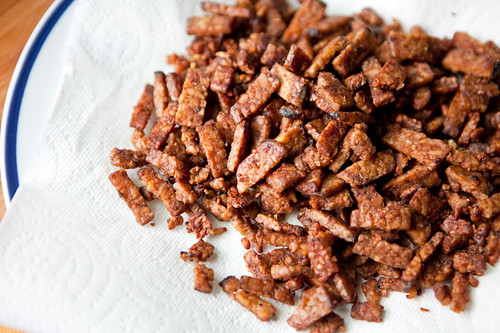
When oil is heated, dip a seitan cutlet in the wet mix coating well. The dredge the cutlet in the dry mix and gently slip it into the oil. Fry for 2-3 minutes on each side, until golden brown and crispy. Drain well on a paper towel and slice if desired.
Assemble the Salad
Toss lettuce with the salad dressing and plate. Add sliced apples and dried cranberries. Place 1 sliced fried seitan cutlet on top and drizzle with more dressing. Serve while the seitan is still warm.

March 25th, 2008

Sometimes you need to trust the classics.
Two times I found a celeriac in my possession, and two times I let it go to waste. I wanted to use it. I just wasn’t sure I wanted to eat it.
Every article I read about celeriac starts the same way: It’s ugly and unpopular, but I swear you’ll like it! It’s humble, gnarly, and caked in dirt, but just try it! It’s tough and fibrous, but treat it right, and you’ll fall in love.
Celeriac certainly has a small but passionate fan club. But even much-loathed brussels sprouts make it to the table during the holidays (I, for one, adore them), and no one has ever attempted to serve me celery root. I figured that if it actually tasted good, it must be such a pain in the ass to prepare it that it wasn’t worth the time.
A brief rundown of celeriac: It’s a root vegetable, and it’s not simply the root of green ribbed celery, but a related plant. It’s about the size of an oblong baseball (or slightly larger), and it’s covered in twisted, knotted roots that collect dirt. The prevailing flavor is celery, but a milder, nuttier flavor than the crispy stalks provide. Some people taste notes of anise, but I didn’t detect that personally. It’s in the same family as carrots, coriander, cumin, fennel, parsley and lovage. It keeps ridiculously well in your refrigerator; wikipedia says you can get 3-4 months of storage out of it if it doesn’t dry out. I wouldn’t keep one that long, but I mention it to underscore the fact I seriously did not have an excuse for not eating the first two I had; it’s not like they went bad.
I remembered today that I had a third, fragrant celeriac taking up room in my refrigerator thanks to my CSA. Stewart was at the office, so I figured I could scrape the whole mess into the trash and pretend nothing had happened, should something go awry. All I needed was a recipe.
People use celery root in a lot of dishes (supposedly), but the classic recipe is something called celery rémoulade. It’s French, and it seems to be as popular in France as cole slaw is here in the states. Since it’s easy to prepare, and widely consumed, I figured celery rémoulade was a good bet. But I needed one final piece of insurance—I adapted a recipe from Julia Child. If I didn’t like celery root prepared this way, chances are I wasn’t going to like it at all.
I’ll quit stalling and tell you what I thought. Holy crap this stuff is good. It wasn’t at all bitter, and shredding and tenderizing the root changed what might have been described as tough and fibrous into delightfully crunchy. The celery flavor tasted… well… warm. If warm was a flavor instead of a feeling, it might taste like celery rémoulade. The creamy Dijon dressing really brought it together, and I can’t wait to have some with my dinner. You should definitely, definitely try this out.
Celery Rémoulade — Adapted from Julia Child
Serves 4-6 as a side dish
1 1/2 tsp Salt
1 1/2 tsp Fresh Lemon Juice
1 Celeriac
Dressing
1/4 Cup Dijon Mustard (check label and make sure there are no eggs in it!)
3 Tbs Boiling Water
1/3 — 1/2 Cup Mild Oil (canola, safflower)
2 Tbs White Wine Vinegar
1/4 tsp Salt (or more to taste)
1/3 — 1/2 Cup Veganaise (vegan mayo)
3 Tbs Fresh Parsley, chopped
Place salt and lemon juice in the bottom of a large bowl. Rinse the root and remove as much dirt as possible with a brush. Using a large, sharp chef’s knife, remove the skin, cutting away the twisted roots. Working quickly (the root will discolor if exposed to air too long), quarter the root and shred finely in a food processor. Add the shredded celeriac to the bowl containing the salt and lemon and toss well, making sure all of the pieces are coated. Leave to tenderize for 20 minutes while preparing dressing. The lemon juice will protect it from browning.


Place another bowl over a pot of warm water on the stove, warming the bowl (like a double-boiler). Add mustard and water and whisk well. Gently drizzle in the oil and whisk to emulsify—take your time so the dressing doesn’t “break”. Dribble in the vinegar, whisking all the while. Add salt.
Rinse the celery root with fresh water and dry well, rolling it in paper towels and squeezing out as much water as you can. Put it back in the bowl (dry the bowl, too) and add the dressing and toss well. Fold in the Veganaise and parsley.
You can eat it immediately, but this refrigerates well. The longer it is refrigerated, up to a few days, the more tender the celeriac gets.

November 12th, 2007

So how do you feel about freezing tofu?
Sometimes I like it, sometimes I don’t. Freezing definitely changes the texture of the tofu. It makes it… hole-ier? My totally unscientifically proven theory is that while tofu looks like a homogenous material, it’s not. When it freezes, the water expands in different areas, leaving behind little miniature tofu caves when you thaw it. This makes the tofu rather sponge-like. This can be good or bad, depending.
It certainly makes your tofu easier to press. You can almost wring it out over the sink like a sponge. Squeeze it between your palms and voila, pressed tofu. But it will suck up liquid just as easily as it releases it. If you’re making baked tofu, use a milder marinade than you might normally, and use more of it. It’s going to suck it up like nobody’s business.
Here, I cubed it and stir-fried it. Frozen tofu is an okay candidate for stir-frying, but beware. It’ll soak up oil just like anything else. “Wow, I thought I put oil in the pan.. where’d it go? Better add more!” You’ll find it later. A tofu cube full of hot oil isn’t my idea of fun. I’d recommend using something non-stick here to prevent an unfortunate dining experience.
But it’s okay if it sticks a little. It’s actually preferable. When it sticks, you can scrape off the sticky parts and you get these fun, crispy tofu crumble things in your final dish. The cubes don’t suffer for it, you just get some great added texture.
This recipe isn’t anything earth shattering, but it’s fast, easy, and super adaptable.
Tofu Kale Stir-fry
Serves two
1-2 Tbs Oil
1 Block Extra Firm Tofu, frozen, thawed, pressed, cubed
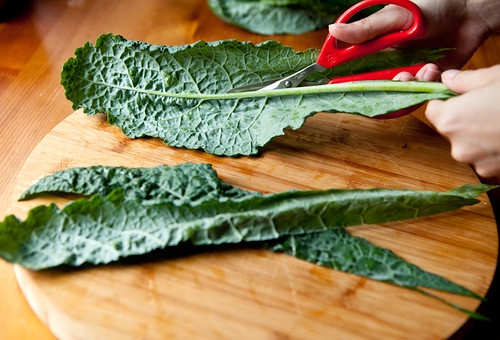
1 Bunch Kale, deveined and ripped into small pieces
1/2 tsp Chili Flakes
1/4+ tsp Ginger Powder (or a bit of fresh ginger, minced)
2 Tbs Low Sodium Tamari
2 tsp Sugar (for a sweeter version, optional)
Heat the oil on high in a well seasoned wok or large non-stick pan. Add tofu carefully, avoiding hot angry oil splatters. Use a wooden spoon to move the tofu around, until it begins to color.
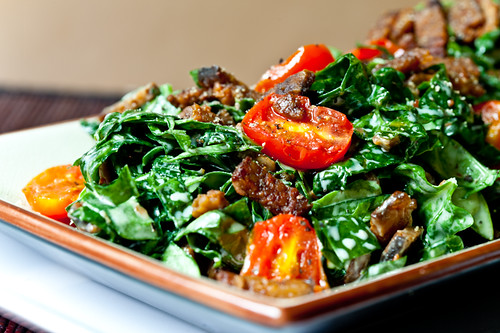
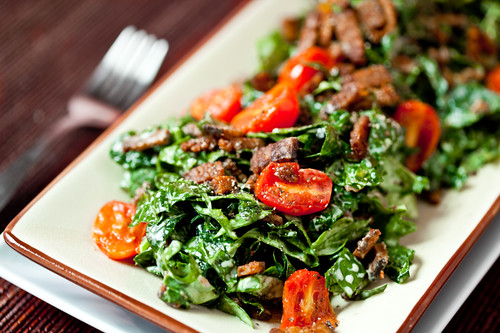
Add kale, chili flakes, and ginger. Cook well, stirring and scraping bits off the bottom, until tofu is golden and kale is getting brown caramelized spots on it. Add tamari and optional sugar, stir well for a few moments, serve immediately with fresh ground pepper over the top.
What’s that in the background? A little green bean salad from the cookbook. I made the salty version of the stir-fry because the salad was sweet

July 18th, 2007

I just can’t wait for my CSA shares to start coming in, so yesterday I went to a farmers market in downtown Boston. My hopes were high, and I spent the entire train ride imagining all the fun greens and maybe even baby spring vegetables I’d bring home. When I arrived, the first tent was full of flowers. The next, herbs. Then there was a bread and pastry tent, some more herbs and flowers, and… that was it.
Where are my vegetables!

I milled around the short string of tents, walking up and down the line, desperately trying to find something other than impatiens and coffee cake. Then I started asking myself, “well, do I need a $25 two year old rosemary plant?” I wanted the answer to be yes, but I kept moving. Finally, tucked between chocolate mint and calla lilies was a huge basket of… leaves? Vines? I wasn’t sure what it was, but it looked like I could eat it. The sign said, “Organic Sweet Pea Tendrils - $3/box.”
I marched up and said, “I’ll take a box, please” as the man behind the table was trying to offer me a sample. “oh,” he said, “you’ll just buy some then?” He probably had spent most of the morning explaining what pea tendrils are and handing out samples to convince people that they really are tasty and you really should eat them. But not me! I’m used to buying mysterious vegetables.
I have a bit of an addiction to trying new and interesting greens. I had no idea, of course, that you could eat pea tendrils. I had no clue as to what they tasted like, but I didn’t care! I wanted a box of that leafy mass he was standing behind; I’d figure out the details later. Of course, as soon as I got home I spent an hour googling them, all the while wishing I had asked a few questions when I bought them.

So here’s what I found out: they are usually lightly stir fried in Chinese cooking, but I think that pertains to pea tendrils that are a bit older and sturdier than the ones I bought. The tendrils I came home with were very delicate, almost the same texture as the clover you have growing in your lawn but with crisper stems. I had no desire to cook them at all, so I whipped up this salad. I did keep the asian flavors, though, by using daikon radish and a sesame soy dressing.
I hope I find them again before spring is over. They are deliciously crisp and sweet, and they taste like peas! Their texture is nice balance between the soft leaves and the thin crispy stems. They don’t keep well, so if you find them at a farmers market or elsewhere, be prepared to eat them that day. I hear you can even grow them yourself quite easily, even indoors.
In short, I’m in love with pea tendrils. You should be, too.

May 31st, 2007

I have some news for you all!
On May 23 I will be in New York City helping Isa Chandra Moskowitz cater a dinner hosted by New York Magazine! It is part of their Secret Kitchen event, which means I can’t share too much information, but here’s what I can say:
When: May 23rd, from 7:30 - 11:30 PM
How: Tickets available here
Where: To be announced 24 hours before event to ticket holders
Who: Isa Chandra of the PPK, and, uh, me!
What: 8 course gourmet dinner, “Think Asian Bat Mitzvah!” says Isa.
Entertainment: Man Man
I’m super excited to be a part of this. We are expecting 300 people! Tickets are listed as currently sold-out, but there is a chance more will become available tomorrow, Tuesday May 15th. Keep checking the link above if you want to go! Hope to see you in New York!
Oh, and if you’re wondering, the picture is a new recipe for my cookbook. It’s grilled pear and candied walnuts, served over cabbage that has been tossed with a lemon brown sugar dressing.

May 14th, 2007
Previous Posts